The Human-AI Reasoning Trifecta
The Human-AI Reasoning Trifecta
The Human-AI Reasoning Trifecta
Written by Stuart McClure • Sep 25, 2025
Your Next Competitive Edge
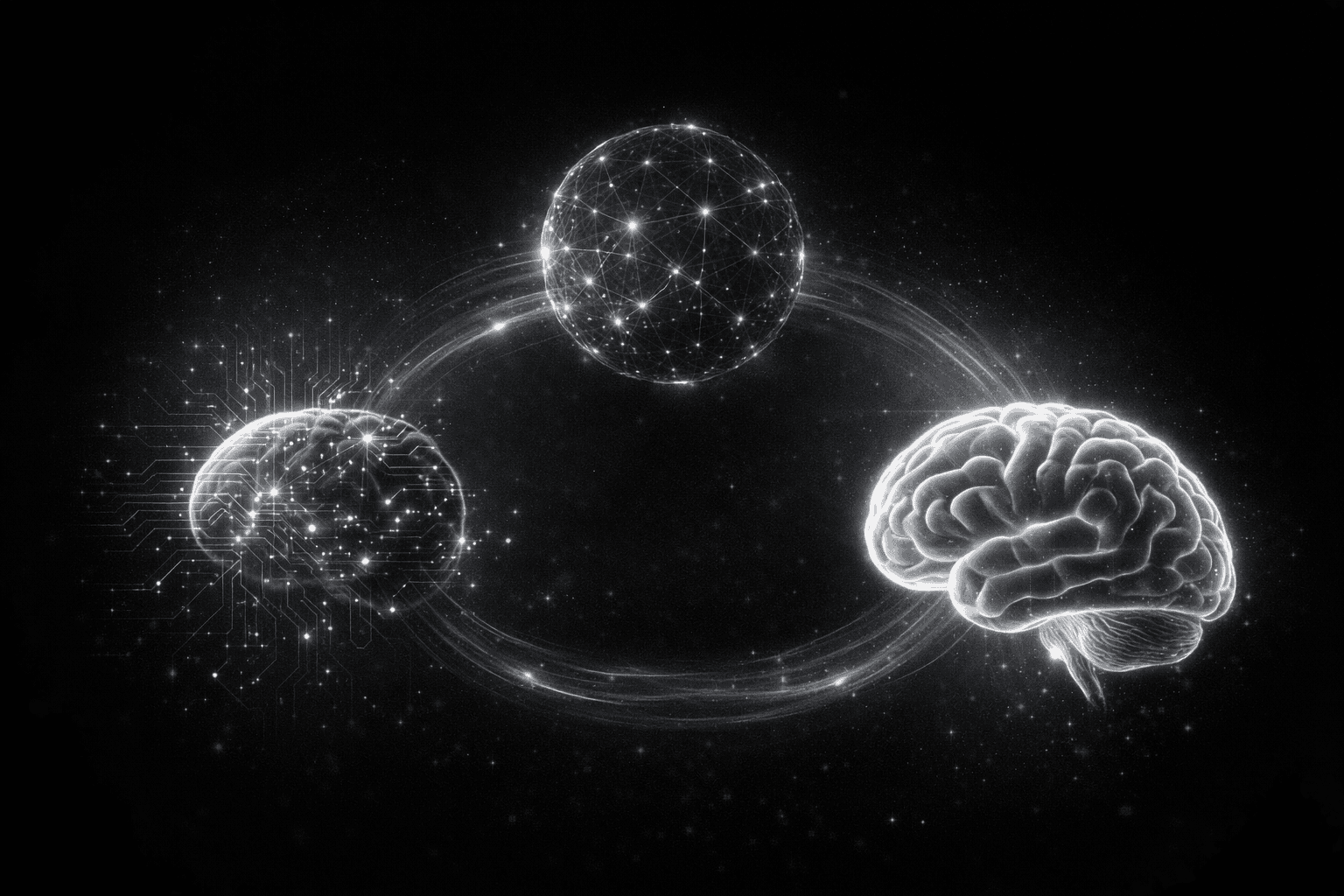
Alright, let's cut to the chase. We're all drowning in AI hype. But the real conversation we need to have in the boardroom isn't about which AI is "smarter." It's about how we, as leaders, can get our teams to think better by pairing human ingenuity with machine intelligence.
For years, I've been building and leading teams in cybersecurity and now AI. The one constant I’ve seen is that the biggest breakthroughs don't come from the smartest person or the fastest machine alone. They come from a powerful combination of different reasoning styles. This isn't just theory; it's the operational reality of how you'll win in the next decade.
Let's break it down into a simple framework I call the reasoning trifecta.
Deductive Reasoning: The AI Workhorse
Think of this as your logic engine. It’s the "if this, then that" processing that AI is brilliant at. You give it a set of rules, and it will execute flawlessly at a scale no human team ever could.
A perfect example is automated code analysis. An AI can scan millions of lines of code against a pre-defined library of known security vulnerabilities, those are the "rules." If it finds a pattern matching a known risk (the "if this"), it flags it and provides the fix ("then that"). It’s a high-volume, rule-based task that prevents breaches and ensures compliance.
Your Call to Action: Where are the rule-based, high-volume, error-prone tasks in your organization? That's your low-hanging fruit. Automate them. Free up your people from the drudgery and let the machines handle the grunt work.
Inductive Reasoning: The AI Pattern-Finder
This is where AI starts to feel like magic. Inductive reasoning is about finding patterns in massive amounts of data to predict what will happen next.
Netflix is a master of this. They use inductive reasoning to de-risk multi-million dollar investments. By analyzing viewing data from millions of users, their AI can identify non-obvious patterns, like a specific director's fans also love historical dramas, to predict with high probability whether a new show will be a hit. It’s not a gut feeling; it’s a data-driven prediction.
Your Call to Action: Ask your teams, "What are the big questions we could answer if we could see every pattern in our data?" Use AI to move from being reactive to predictive.
Abductive Reasoning: The Human "Spark"
This is the most important piece of the puzzle, and it's where we, the humans, are still firmly in the driver's seat. Abductive reasoning is the art of the "best guess." It’s your gut feeling, your intuition, the creative leap.
Think of Albert Einstein and his thought experiments. He couldn't prove relativity with the data he had at the time. He started by asking imaginative questions, "What would I see if I rode on a beam of light?", and used his intuition to form a hypothesis that data would later confirm. That's the human spark that asks the questions no one else is asking.
Your Call to Action: Foster a culture that values this spark. Not every great idea will have a spreadsheet to back it up initially. Encourage your people to ask "why" and "what if." Create forums where they can bring these intuitive hypotheses to the table.
Putting It All Together: The Real Challenge for Leaders
The real magic happens when you combine all three reasoning styles. This isn't a new idea. One of the most powerful examples comes from Alan Turing and his team at Bletchley Park during WWII.
Abductive (Human): The codebreakers used their human intuition, their abductive reasoning, to guess at probable words in secret German messages.
Deductive/Inductive (Machine): They fed this human hypothesis into the "Bombe" machine, which performed the massive-scale deductive work to find the correct Enigma settings.
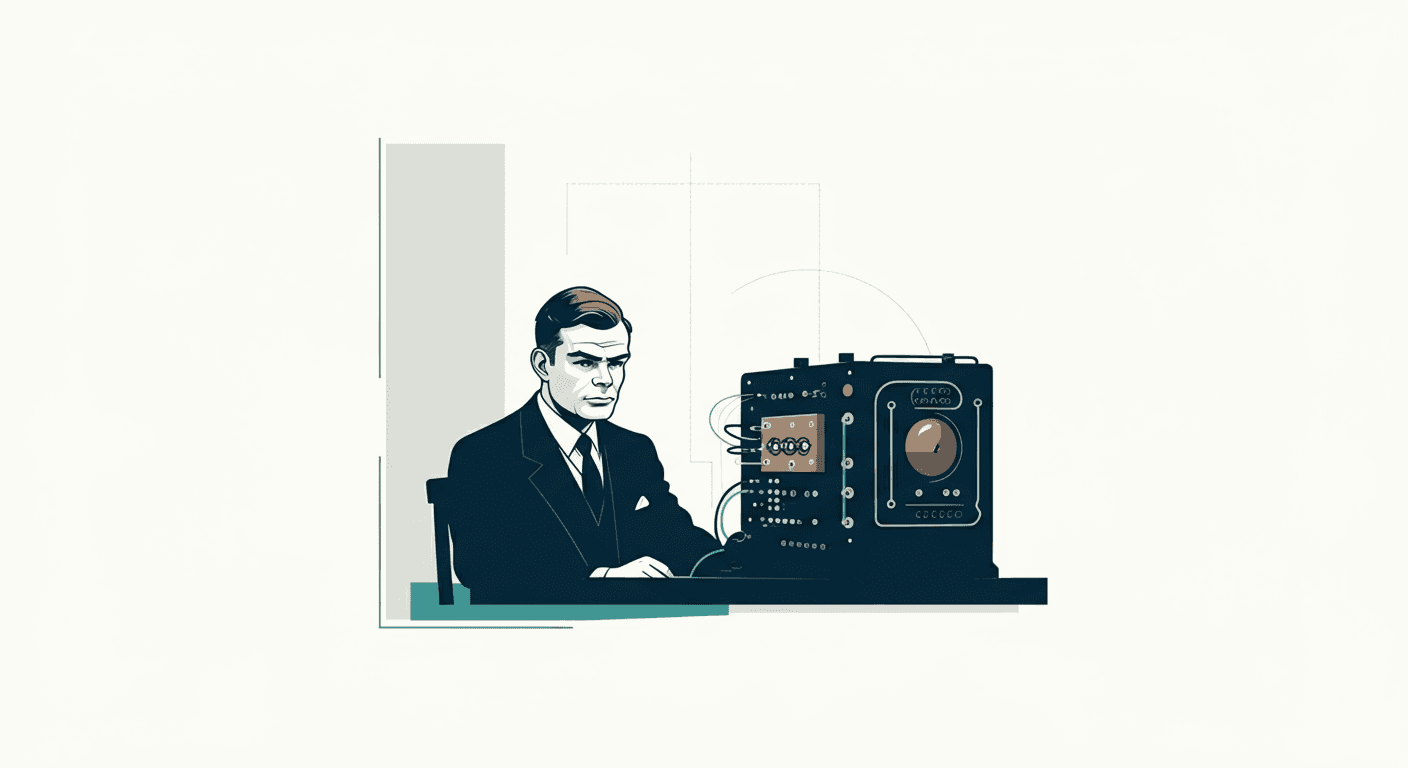
It was the perfect virtuous cycle: a human spark guiding a machine's logic to change the course of the war. But here’s the critical takeaway for us as leaders: Turing didn't just have a machine; he had the right people. He assembled a team of crossword puzzle champions, linguists, and mathematicians, people whose minds were naturally wired for the abductive leaps required to even know what questions to ask the machine.
This is the challenge we face today. It's easy to buy AI. It's hard to build a team that knows how to use it.
This brings us to the ultimate question: If the "human spark" is our greatest competitive advantage, how do we quantify it? How do you identify the natural abductive reasoners, the inductive pattern-matchers, and the deductive process-drivers on your own teams? How do you combine them to create a high-performance "Bletchley Park" of your own?
At Wethos AI, we are obsessed with answering these questions. We believe that understanding people, their innate traits, cognitive biases, and reasoning styles, is the true frontier of leadership in the age of AI. We are applying these very themes to build a platform that gives leaders the visibility they need to assemble the best humans to wield the power of AI.
Your job isn't just to buy the best AI. It's to build the best team.
The Human-AI Reasoning Trifecta
Written by Stuart McClure • Sep 25, 2025
Your Next Competitive Edge
Alright, let's cut to the chase. We're all drowning in AI hype. But the real conversation we need to have in the boardroom isn't about which AI is "smarter." It's about how we, as leaders, can get our teams to think better by pairing human ingenuity with machine intelligence.
For years, I've been building and leading teams in cybersecurity and now AI. The one constant I’ve seen is that the biggest breakthroughs don't come from the smartest person or the fastest machine alone. They come from a powerful combination of different reasoning styles. This isn't just theory; it's the operational reality of how you'll win in the next decade.
Let's break it down into a simple framework I call the reasoning trifecta.
Deductive Reasoning: The AI Workhorse
Think of this as your logic engine. It’s the "if this, then that" processing that AI is brilliant at. You give it a set of rules, and it will execute flawlessly at a scale no human team ever could.
A perfect example is automated code analysis. An AI can scan millions of lines of code against a pre-defined library of known security vulnerabilities, those are the "rules." If it finds a pattern matching a known risk (the "if this"), it flags it and provides the fix ("then that"). It’s a high-volume, rule-based task that prevents breaches and ensures compliance.
Your Call to Action: Where are the rule-based, high-volume, error-prone tasks in your organization? That's your low-hanging fruit. Automate them. Free up your people from the drudgery and let the machines handle the grunt work.
Inductive Reasoning: The AI Pattern-Finder
This is where AI starts to feel like magic. Inductive reasoning is about finding patterns in massive amounts of data to predict what will happen next.
Netflix is a master of this. They use inductive reasoning to de-risk multi-million dollar investments. By analyzing viewing data from millions of users, their AI can identify non-obvious patterns, like a specific director's fans also love historical dramas, to predict with high probability whether a new show will be a hit. It’s not a gut feeling; it’s a data-driven prediction.
Your Call to Action: Ask your teams, "What are the big questions we could answer if we could see every pattern in our data?" Use AI to move from being reactive to predictive.
Abductive Reasoning: The Human "Spark"
This is the most important piece of the puzzle, and it's where we, the humans, are still firmly in the driver's seat. Abductive reasoning is the art of the "best guess." It’s your gut feeling, your intuition, the creative leap.
Think of Albert Einstein and his thought experiments. He couldn't prove relativity with the data he had at the time. He started by asking imaginative questions, "What would I see if I rode on a beam of light?", and used his intuition to form a hypothesis that data would later confirm. That's the human spark that asks the questions no one else is asking.
Your Call to Action: Foster a culture that values this spark. Not every great idea will have a spreadsheet to back it up initially. Encourage your people to ask "why" and "what if." Create forums where they can bring these intuitive hypotheses to the table.
Putting It All Together: The Real Challenge for Leaders
The real magic happens when you combine all three reasoning styles. This isn't a new idea. One of the most powerful examples comes from Alan Turing and his team at Bletchley Park during WWII.
Abductive (Human): The codebreakers used their human intuition, their abductive reasoning, to guess at probable words in secret German messages.
Deductive/Inductive (Machine): They fed this human hypothesis into the "Bombe" machine, which performed the massive-scale deductive work to find the correct Enigma settings.
It was the perfect virtuous cycle: a human spark guiding a machine's logic to change the course of the war. But here’s the critical takeaway for us as leaders: Turing didn't just have a machine; he had the right people. He assembled a team of crossword puzzle champions, linguists, and mathematicians, people whose minds were naturally wired for the abductive leaps required to even know what questions to ask the machine.
This is the challenge we face today. It's easy to buy AI. It's hard to build a team that knows how to use it.
This brings us to the ultimate question: If the "human spark" is our greatest competitive advantage, how do we quantify it? How do you identify the natural abductive reasoners, the inductive pattern-matchers, and the deductive process-drivers on your own teams? How do you combine them to create a high-performance "Bletchley Park" of your own?
At Wethos AI, we are obsessed with answering these questions. We believe that understanding people, their innate traits, cognitive biases, and reasoning styles, is the true frontier of leadership in the age of AI. We are applying these very themes to build a platform that gives leaders the visibility they need to assemble the best humans to wield the power of AI.
Your job isn't just to buy the best AI. It's to build the best team.
The Human-AI Reasoning Trifecta
Written by Stuart McClure • Sep 25, 2025
Your Next Competitive Edge
Alright, let's cut to the chase. We're all drowning in AI hype. But the real conversation we need to have in the boardroom isn't about which AI is "smarter." It's about how we, as leaders, can get our teams to think better by pairing human ingenuity with machine intelligence.
For years, I've been building and leading teams in cybersecurity and now AI. The one constant I’ve seen is that the biggest breakthroughs don't come from the smartest person or the fastest machine alone. They come from a powerful combination of different reasoning styles. This isn't just theory; it's the operational reality of how you'll win in the next decade.
Let's break it down into a simple framework I call the reasoning trifecta.
Deductive Reasoning: The AI Workhorse
Think of this as your logic engine. It’s the "if this, then that" processing that AI is brilliant at. You give it a set of rules, and it will execute flawlessly at a scale no human team ever could.
A perfect example is automated code analysis. An AI can scan millions of lines of code against a pre-defined library of known security vulnerabilities, those are the "rules." If it finds a pattern matching a known risk (the "if this"), it flags it and provides the fix ("then that"). It’s a high-volume, rule-based task that prevents breaches and ensures compliance.
Your Call to Action: Where are the rule-based, high-volume, error-prone tasks in your organization? That's your low-hanging fruit. Automate them. Free up your people from the drudgery and let the machines handle the grunt work.
Inductive Reasoning: The AI Pattern-Finder
This is where AI starts to feel like magic. Inductive reasoning is about finding patterns in massive amounts of data to predict what will happen next.
Netflix is a master of this. They use inductive reasoning to de-risk multi-million dollar investments. By analyzing viewing data from millions of users, their AI can identify non-obvious patterns, like a specific director's fans also love historical dramas, to predict with high probability whether a new show will be a hit. It’s not a gut feeling; it’s a data-driven prediction.
Your Call to Action: Ask your teams, "What are the big questions we could answer if we could see every pattern in our data?" Use AI to move from being reactive to predictive.
Abductive Reasoning: The Human "Spark"
This is the most important piece of the puzzle, and it's where we, the humans, are still firmly in the driver's seat. Abductive reasoning is the art of the "best guess." It’s your gut feeling, your intuition, the creative leap.
Think of Albert Einstein and his thought experiments. He couldn't prove relativity with the data he had at the time. He started by asking imaginative questions, "What would I see if I rode on a beam of light?", and used his intuition to form a hypothesis that data would later confirm. That's the human spark that asks the questions no one else is asking.
Your Call to Action: Foster a culture that values this spark. Not every great idea will have a spreadsheet to back it up initially. Encourage your people to ask "why" and "what if." Create forums where they can bring these intuitive hypotheses to the table.
Putting It All Together: The Real Challenge for Leaders
The real magic happens when you combine all three reasoning styles. This isn't a new idea. One of the most powerful examples comes from Alan Turing and his team at Bletchley Park during WWII.
Abductive (Human): The codebreakers used their human intuition, their abductive reasoning, to guess at probable words in secret German messages.
Deductive/Inductive (Machine): They fed this human hypothesis into the "Bombe" machine, which performed the massive-scale deductive work to find the correct Enigma settings.
It was the perfect virtuous cycle: a human spark guiding a machine's logic to change the course of the war. But here’s the critical takeaway for us as leaders: Turing didn't just have a machine; he had the right people. He assembled a team of crossword puzzle champions, linguists, and mathematicians, people whose minds were naturally wired for the abductive leaps required to even know what questions to ask the machine.
This is the challenge we face today. It's easy to buy AI. It's hard to build a team that knows how to use it.
This brings us to the ultimate question: If the "human spark" is our greatest competitive advantage, how do we quantify it? How do you identify the natural abductive reasoners, the inductive pattern-matchers, and the deductive process-drivers on your own teams? How do you combine them to create a high-performance "Bletchley Park" of your own?
At Wethos AI, we are obsessed with answering these questions. We believe that understanding people, their innate traits, cognitive biases, and reasoning styles, is the true frontier of leadership in the age of AI. We are applying these very themes to build a platform that gives leaders the visibility they need to assemble the best humans to wield the power of AI.
Your job isn't just to buy the best AI. It's to build the best team.