How False Consensus Effect hurts more companies than any cyberattack.
How False Consensus Effect hurts more companies than any cyberattack.

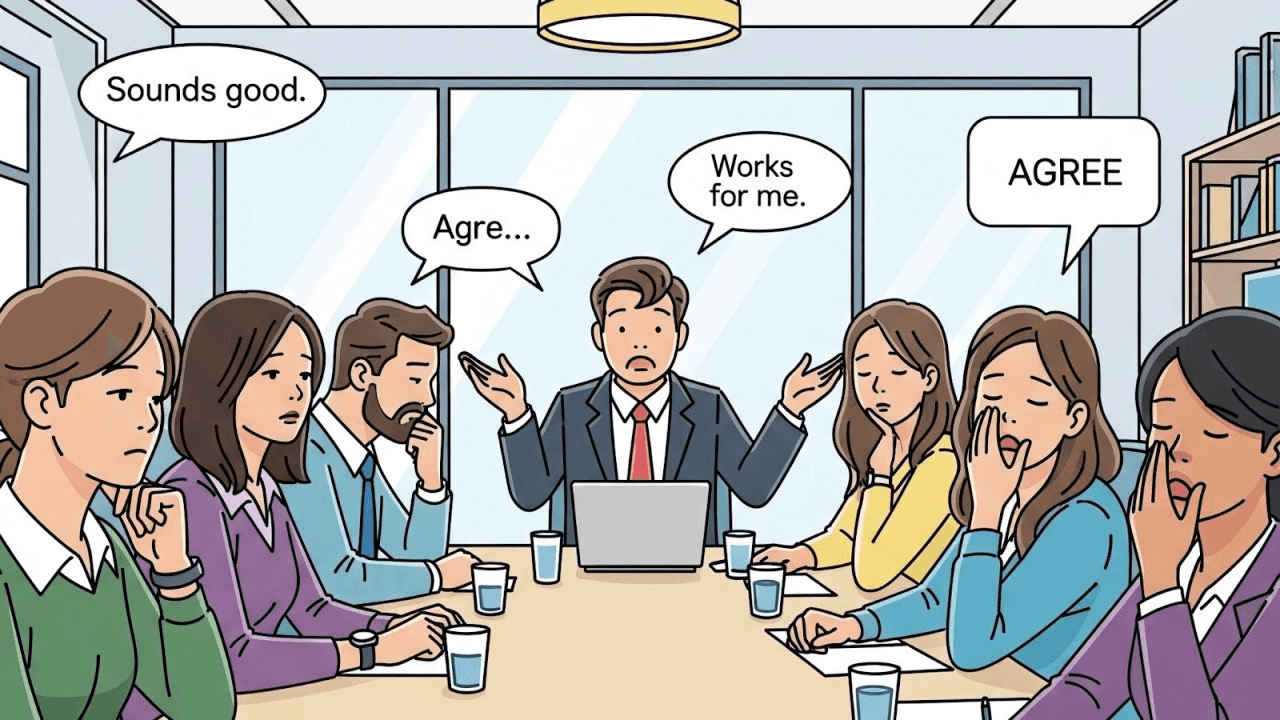
The cost of the head nod? How False Consensus Effect hurts more companies than any cyberattack.
Written by Stuart McClure • Dec 16, 2025
In my career, I’ve seen brilliant strategies derailed, nine-figure products fail, and talented teams lose their way. The cause is rarely a catastrophic technical failure or a sudden market collapse. More often, it’s something far quieter and more insidious: a simple, subconscious assumption that other people see the world the same way you do.
This problem is the False Consensus Effect. It’s the cognitive shortcut that makes us overestimate how much others agree with our beliefs, share our values, and find our conclusions “obvious.”
It feels natural. It feels efficient. In the age of AI, where decisions are made and scaled at unprecedented speed, ignoring false consensus bias can lead to costly strategic errors.
We Project Our Reality Onto Others
This bias isn't an abstract psychological concept; it’s a daily occurrence. I grew up in Guam and Hawaii before my family settled in Colorado. When I mention this, the follow-up question is almost always, "Was your family in the military?"
It’s a logical question, born from a standard pattern they've observed. For them, a non-military American living on a Pacific island is an edge case. So, their brain defaults to the most familiar explanation. It’s a harmless projection of their worldview. But it’s incorrect.
In a casual conversation, this is a minor detail. In a boardroom, however, this exact mechanism, projecting your own reality onto your customers, your market, or your team, is a critical failure of strategic vision. It’s the root of solutions, looking for problems and products built for an audience of one.

How False Consensus Sinks Good Technology
I’ve had a front-row seat to this phenomenon for decades, first in cybersecurity and now in AI. The pattern is tragically consistent. A brilliant team of engineers develops a new tool. They’ve lived and breathed the problem for months. To them, the value proposition is crystal clear. The user interface is intuitive. The workflow is logical. They become so immersed in their own creation that they assume any rational user will immediately see its genius.
They are almost always wrong.
The end-user, the CISO, the security analyst, and the marketing manager don't share the engineer's context. They have different pressures, legacy systems to maintain, budget constraints, and a dozen other priorities competing for their attention. When we build technology assuming our "obvious" is universal, we create products that are technically powerful but practically useless.
At my first startup, Foundstone, and later at Cylance, we were constantly fighting this. We could build a tool that stopped a novel cyberattack with 99.9% efficacy. Still, if it required three extra clicks from an already overwhelmed security admin, its real-world efficacy was zero. We weren't wrong about the technology; we were wrong about the people. And in business, that's the only distinction that matters.
The Grave Danger of AI-Amplified Groupthink
The danger of groupthink is amplified exponentially by the introduction of AI. At their core, AI models are advanced pattern-recognition systems that learn from the data we provide. If a single, consensus viewpoint dominates this data, the model will adopt that viewpoint as the objective reality. The AI's outputs then solidify this consensus, forming a potent feedback loop where alignment is mistaken for truth. Consequently, minority perspectives, niche requirements, and dissenting views are not merely overlooked; they are statistically eliminated. This process is not a form of intelligence; it is high-speed conformity.
This represents a significant vulnerability for a C-suite executive. Reliance on AI models, such as a marketing tool trained on mainstream data, can create a significant blind spot, causing them to miss niche subcultures that drive future trends. Similarly, a risk-assessment AI reliant on historical data might fail to detect a novel "black swan" event because it lacks a precedent. In essence, they become isolated from the very outlier data and edge cases that often foreshadow the next major market crisis or shift.
Fighting Bias Isn't a Feeling, It's a Structure
You cannot overcome this bias by simply "trying to be more open-minded." Building organizational structures that force your teams out of their own heads will empower you to make more confident, informed decisions.
For leaders, this means moving beyond good intentions and implementing concrete systems:
Mandate Real-World Friction: Don't just ask for feedback; build relentless user testing and customer immersion into your product lifecycle. Don't rely on focus groups of friendly customers. Go find the people who don't get it, the ones who find your "intuitive" design confusing. Their perspective is infinitely more valuable than any internal consensus. This friction is not a bug in the process; it is the entire point of the process.
Build for Cognitive Diversity: Beyond surface demographics, hire for diverse thinking styles. Engineers, salespeople, designers, and legal counsel see problems differently. Proper alignment comes from respecting and integrating these competing perspectives, not agreement. A unanimous team simply shares blind spots. My work at Wethos AI uses objective data to assess thinking and collaboration, moving past subjective hiring that leads to false consensus.
Prioritize Prevention Over Reaction: Effective leaders prevent problems by building safeguards against bias. Approach gives you confidence, even if you create the wrong product, hire the wrong team, or chase the wrong market, before you've invested millions of dollars and thousands of hours. It is the guardrail that keeps your strategy and reduces uncertainty.
In the era of AI, the speed and scale of our decisions are unprecedented. We no longer have the luxury of learning from our assumptions slowly. Projecting your worldview onto your strategy isn't just a flaw; it's a fundamental liability. The ultimate competitive advantage won't come from having the best AI. It will come from humility, knowing your perspective is just one of many, and from building an organization that is structurally designed to see all the others.
The cost of the head nod? How False Consensus Effect hurts more companies than any cyberattack.
Written by Stuart McClure • Dec 16, 2025
In my career, I’ve seen brilliant strategies derailed, nine-figure products fail, and talented teams lose their way. The cause is rarely a catastrophic technical failure or a sudden market collapse. More often, it’s something far quieter and more insidious: a simple, subconscious assumption that other people see the world the same way you do.
This problem is the False Consensus Effect. It’s the cognitive shortcut that makes us overestimate how much others agree with our beliefs, share our values, and find our conclusions “obvious.”
It feels natural. It feels efficient. In the age of AI, where decisions are made and scaled at unprecedented speed, ignoring false consensus bias can lead to costly strategic errors.
We Project Our Reality Onto Others
This bias isn't an abstract psychological concept; it’s a daily occurrence. I grew up in Guam and Hawaii before my family settled in Colorado. When I mention this, the follow-up question is almost always, "Was your family in the military?"
It’s a logical question, born from a standard pattern they've observed. For them, a non-military American living on a Pacific island is an edge case. So, their brain defaults to the most familiar explanation. It’s a harmless projection of their worldview. But it’s incorrect.
In a casual conversation, this is a minor detail. In a boardroom, however, this exact mechanism, projecting your own reality onto your customers, your market, or your team, is a critical failure of strategic vision. It’s the root of solutions, looking for problems and products built for an audience of one.
How False Consensus Sinks Good Technology
I’ve had a front-row seat to this phenomenon for decades, first in cybersecurity and now in AI. The pattern is tragically consistent. A brilliant team of engineers develops a new tool. They’ve lived and breathed the problem for months. To them, the value proposition is crystal clear. The user interface is intuitive. The workflow is logical. They become so immersed in their own creation that they assume any rational user will immediately see its genius.
They are almost always wrong.
The end-user, the CISO, the security analyst, and the marketing manager don't share the engineer's context. They have different pressures, legacy systems to maintain, budget constraints, and a dozen other priorities competing for their attention. When we build technology assuming our "obvious" is universal, we create products that are technically powerful but practically useless.
At my first startup, Foundstone, and later at Cylance, we were constantly fighting this. We could build a tool that stopped a novel cyberattack with 99.9% efficacy. Still, if it required three extra clicks from an already overwhelmed security admin, its real-world efficacy was zero. We weren't wrong about the technology; we were wrong about the people. And in business, that's the only distinction that matters.
The Grave Danger of AI-Amplified Groupthink
The danger of groupthink is amplified exponentially by the introduction of AI. At their core, AI models are advanced pattern-recognition systems that learn from the data we provide. If a single, consensus viewpoint dominates this data, the model will adopt that viewpoint as the objective reality. The AI's outputs then solidify this consensus, forming a potent feedback loop where alignment is mistaken for truth. Consequently, minority perspectives, niche requirements, and dissenting views are not merely overlooked; they are statistically eliminated. This process is not a form of intelligence; it is high-speed conformity.
This represents a significant vulnerability for a C-suite executive. Reliance on AI models, such as a marketing tool trained on mainstream data, can create a significant blind spot, causing them to miss niche subcultures that drive future trends. Similarly, a risk-assessment AI reliant on historical data might fail to detect a novel "black swan" event because it lacks a precedent. In essence, they become isolated from the very outlier data and edge cases that often foreshadow the next major market crisis or shift.
Fighting Bias Isn't a Feeling, It's a Structure
You cannot overcome this bias by simply "trying to be more open-minded." Building organizational structures that force your teams out of their own heads will empower you to make more confident, informed decisions.
For leaders, this means moving beyond good intentions and implementing concrete systems:
Mandate Real-World Friction: Don't just ask for feedback; build relentless user testing and customer immersion into your product lifecycle. Don't rely on focus groups of friendly customers. Go find the people who don't get it, the ones who find your "intuitive" design confusing. Their perspective is infinitely more valuable than any internal consensus. This friction is not a bug in the process; it is the entire point of the process.
Build for Cognitive Diversity: Beyond surface demographics, hire for diverse thinking styles. Engineers, salespeople, designers, and legal counsel see problems differently. Proper alignment comes from respecting and integrating these competing perspectives, not agreement. A unanimous team simply shares blind spots. My work at Wethos AI uses objective data to assess thinking and collaboration, moving past subjective hiring that leads to false consensus.
Prioritize Prevention Over Reaction: Effective leaders prevent problems by building safeguards against bias. Approach gives you confidence, even if you create the wrong product, hire the wrong team, or chase the wrong market, before you've invested millions of dollars and thousands of hours. It is the guardrail that keeps your strategy and reduces uncertainty.
In the era of AI, the speed and scale of our decisions are unprecedented. We no longer have the luxury of learning from our assumptions slowly. Projecting your worldview onto your strategy isn't just a flaw; it's a fundamental liability. The ultimate competitive advantage won't come from having the best AI. It will come from humility, knowing your perspective is just one of many, and from building an organization that is structurally designed to see all the others.
The cost of the head nod? How False Consensus Effect hurts more companies than any cyberattack.
Written by Stuart McClure • Dec 16, 2025
In my career, I’ve seen brilliant strategies derailed, nine-figure products fail, and talented teams lose their way. The cause is rarely a catastrophic technical failure or a sudden market collapse. More often, it’s something far quieter and more insidious: a simple, subconscious assumption that other people see the world the same way you do.
This problem is the False Consensus Effect. It’s the cognitive shortcut that makes us overestimate how much others agree with our beliefs, share our values, and find our conclusions “obvious.”
It feels natural. It feels efficient. In the age of AI, where decisions are made and scaled at unprecedented speed, ignoring false consensus bias can lead to costly strategic errors.
We Project Our Reality Onto Others
This bias isn't an abstract psychological concept; it’s a daily occurrence. I grew up in Guam and Hawaii before my family settled in Colorado. When I mention this, the follow-up question is almost always, "Was your family in the military?"
It’s a logical question, born from a standard pattern they've observed. For them, a non-military American living on a Pacific island is an edge case. So, their brain defaults to the most familiar explanation. It’s a harmless projection of their worldview. But it’s incorrect.
In a casual conversation, this is a minor detail. In a boardroom, however, this exact mechanism, projecting your own reality onto your customers, your market, or your team, is a critical failure of strategic vision. It’s the root of solutions, looking for problems and products built for an audience of one.
How False Consensus Sinks Good Technology
I’ve had a front-row seat to this phenomenon for decades, first in cybersecurity and now in AI. The pattern is tragically consistent. A brilliant team of engineers develops a new tool. They’ve lived and breathed the problem for months. To them, the value proposition is crystal clear. The user interface is intuitive. The workflow is logical. They become so immersed in their own creation that they assume any rational user will immediately see its genius.
They are almost always wrong.
The end-user, the CISO, the security analyst, and the marketing manager don't share the engineer's context. They have different pressures, legacy systems to maintain, budget constraints, and a dozen other priorities competing for their attention. When we build technology assuming our "obvious" is universal, we create products that are technically powerful but practically useless.
At my first startup, Foundstone, and later at Cylance, we were constantly fighting this. We could build a tool that stopped a novel cyberattack with 99.9% efficacy. Still, if it required three extra clicks from an already overwhelmed security admin, its real-world efficacy was zero. We weren't wrong about the technology; we were wrong about the people. And in business, that's the only distinction that matters.
The Grave Danger of AI-Amplified Groupthink
The danger of groupthink is amplified exponentially by the introduction of AI. At their core, AI models are advanced pattern-recognition systems that learn from the data we provide. If a single, consensus viewpoint dominates this data, the model will adopt that viewpoint as the objective reality. The AI's outputs then solidify this consensus, forming a potent feedback loop where alignment is mistaken for truth. Consequently, minority perspectives, niche requirements, and dissenting views are not merely overlooked; they are statistically eliminated. This process is not a form of intelligence; it is high-speed conformity.
This represents a significant vulnerability for a C-suite executive. Reliance on AI models, such as a marketing tool trained on mainstream data, can create a significant blind spot, causing them to miss niche subcultures that drive future trends. Similarly, a risk-assessment AI reliant on historical data might fail to detect a novel "black swan" event because it lacks a precedent. In essence, they become isolated from the very outlier data and edge cases that often foreshadow the next major market crisis or shift.
Fighting Bias Isn't a Feeling, It's a Structure
You cannot overcome this bias by simply "trying to be more open-minded." Building organizational structures that force your teams out of their own heads will empower you to make more confident, informed decisions.
For leaders, this means moving beyond good intentions and implementing concrete systems:
Mandate Real-World Friction: Don't just ask for feedback; build relentless user testing and customer immersion into your product lifecycle. Don't rely on focus groups of friendly customers. Go find the people who don't get it, the ones who find your "intuitive" design confusing. Their perspective is infinitely more valuable than any internal consensus. This friction is not a bug in the process; it is the entire point of the process.
Build for Cognitive Diversity: Beyond surface demographics, hire for diverse thinking styles. Engineers, salespeople, designers, and legal counsel see problems differently. Proper alignment comes from respecting and integrating these competing perspectives, not agreement. A unanimous team simply shares blind spots. My work at Wethos AI uses objective data to assess thinking and collaboration, moving past subjective hiring that leads to false consensus.
Prioritize Prevention Over Reaction: Effective leaders prevent problems by building safeguards against bias. Approach gives you confidence, even if you create the wrong product, hire the wrong team, or chase the wrong market, before you've invested millions of dollars and thousands of hours. It is the guardrail that keeps your strategy and reduces uncertainty.
In the era of AI, the speed and scale of our decisions are unprecedented. We no longer have the luxury of learning from our assumptions slowly. Projecting your worldview onto your strategy isn't just a flaw; it's a fundamental liability. The ultimate competitive advantage won't come from having the best AI. It will come from humility, knowing your perspective is just one of many, and from building an organization that is structurally designed to see all the others.